

Ah, rai, oh rai!
I raised the white flag and that’s it
I’m done fighting pointless battles
Just trash and rabble, oh mother
Oh mama! I raised the white flag, that’s it
They’ve dropped the masks and the face coverings
And I keep a smile on my face… like the moon
When Moroccan rapper Draganov released his single Tach in August 2025, he might not have anticipated the polemic it would ignite between Moroccan and Algerian audiences.
The track is notable for two reasons: first, it blends rap with rai, a genre deeply associated with shared Maghrebi culture; second, the videoclip features Algerian comedian and dancer Mohamed Khassani. Collaborations like this are common in the music scene, yet many viewers focused on the visual contrast between the two performers: Khassani dances energetically while Draganov remains seated, static, and positioned higher in the frame. Some interpreted this as humiliation, hierarchy, and a symbolic power imbalance between the Moroccan rapper and the Algerian performer.
Others saw it as a purely artistic choice, consistent with Draganov’s usual visual aesthetics — characterized by bold framing, theatrical postures, and stylized gestures — and faithful to Khassani’s highly expressive performance style. The song also incorporates everyday Maghrebi cultural references, such as the traditional maryoul, further embedding it in a shared cultural landscape. Ironically, the lyrics of Tach themselves advocate surrendering conflict rather than staging it, as seen in the chorus: “I raised the white flag… I’m done fighting pointless battles.”
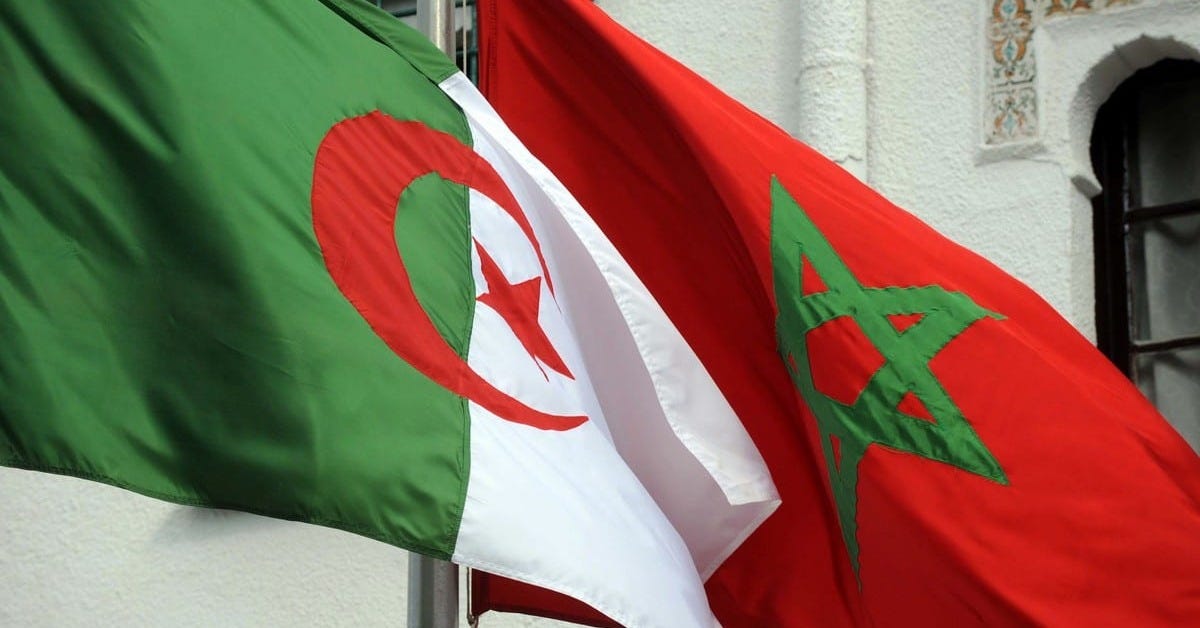
The duo faced an intense backlash on social media, particularly from Maghrebi audiences online. Criticism focused less on the music itself and more on questions of national identity, cultural legitimacy, and the crossing of symbolic borders. This online hate was driven by nationalist projections, not by the artists, and was amplified by already entrenched Morocco–Algeria political tensions. In response, Draganov and Khassani rejected accusations of provocation, framing the song as a message of appeasement and referring to both nations as “twin countries.”
At the heart of the controversy is a struggle over shared cultural symbols — which some interpret as belonging exclusively to one nation rather than as part of a Maghrebi heritage. This dynamic extends beyond music to cuisine (e.g., couscous, msemen) and other traditions. Online spaces thus become identity battlegrounds, where diasporic and transnational cultural codes collide with nationalist readings.
The significance of this controversy lies in how it illustrates that culture can become a proxy for political conflict. Online outrage often reflects frustration, nationalism, and historical resentment, while artists are punished for collaboration, cross-border creativity, or refusing rigid national categories. This pattern is visible beyond music: for instance, during the last African Cup of Nations, rival supporters celebrated each other’s defeats, revealing how symbolic battles often overshadow reality.
Despite the backlash, Tach has garnered nearly 50 million views, with the controversy arguably fueling its visibility — once again highlighting the gap between online outrage and public reception.
Ultimately, the central question is: who decides what belongs to whom in Maghrebi culture — artists, states, or angry online crowds? The very fact that people fiercely debate shared heritage, despite different names and local variations, is proof of its shared nature. These polemics reveal less about culture itself than about internalized borders, political tensions projected onto everyday symbols, and national frustrations channeled through social media, where identities seek validation through symbolism. Culture becomes the battlefield precisely because it is one of the few accessible arenas, while real people often have no actual conflict with one another.
In case you missed it…
OFFBEAT - From the cités to the screen. The rise and evolution of banlieue cinema.
ALT PICKS - The Chaos Machine by Max Fisher