

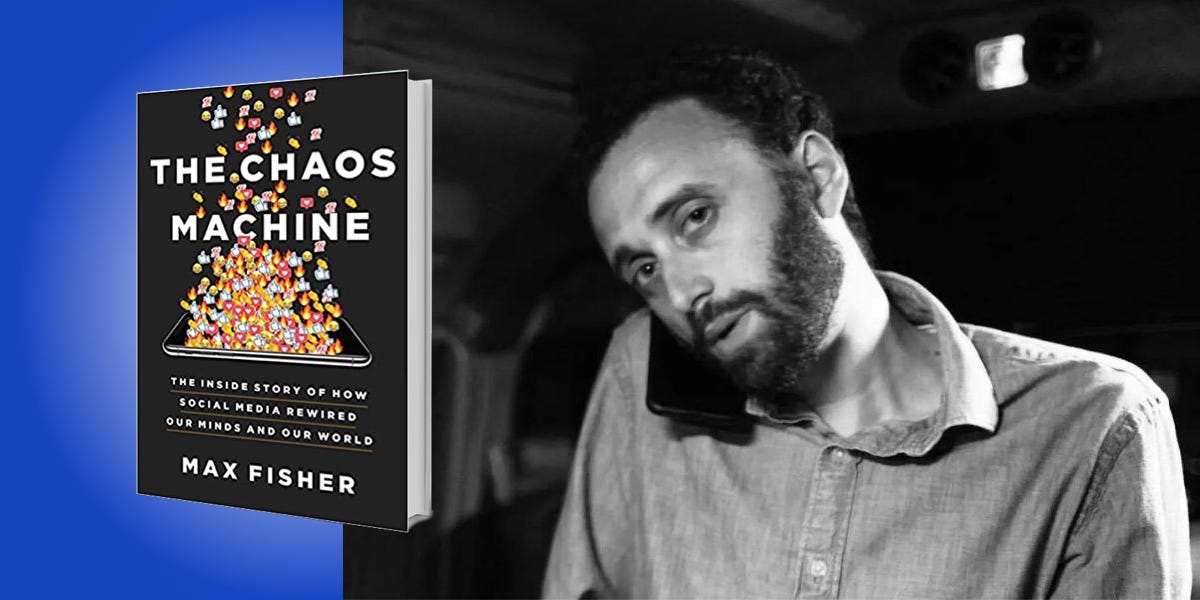
Recently, I had the chance to read The Chaos Machine by Max Fisher and, honestly, I was truly terrified. Almost 500 pages in which he explains how social media platforms actually work. Did you know that the genocide against the Rohingya in Myanmar would likely never have reached its extent without Facebook? Or that YouTube’s algorithm is a radicalization machine?
Through interviews with Silicon Valley runaways, a wide range of academic studies tracing how these platforms function, and firsthand testimonies from people whose lives were destroyed by online disinformation, Fisher plunges us into an abyss of hate, lies, and manipulation. Most people do not really know how social media platforms work. Our online habits aren’t entirely free choices but responses to systems designed to keep us hooked, divided, and constantly scrolling.
As a journalist, it was frightening for me to read educated people quoted in the book saying: “We inform ourselves through Facebook because it tells the truth, not like the media.” Often, this comes from well-intentioned people who confuse popularity with veracity. Social media algorithms do not care about the content itself or its quality, but about interaction. They therefore promote content that generates strong reactions.
Because platforms operate through emotions, they tend to amplify extreme content. In the case of YouTube, the algorithm creates radicalization paths that can take users from moderate or conservative content to extremist material in just two clicks. This dynamic has not only fueled polarization but also produced entirely online-born movements, such as QAnon, that later spilled into the real world. The book also shows how the rise of Bolsonaro and the Brazilian far right largely unfolded online.
What scared and angered me the most was learning how, time and again, activists, academics, and even high-level government officials asked platforms to remove content fueling hate and violence, only to be ignored. We are, in many ways, captive to a handful of Silicon Valley engineers with a semi-god complex, still convinced their platforms are good for the world while refusing to acknowledge the harm they have caused.
I strongly recommend this book. It is eye-opening, and you will never see social media the same way again.
Alt Picks for its relevance, depth, and its ability to make us question the technology we interact with every day.
Get it here: https://www.goodreads.com/book/show/58950736-the-chaos-machine
In case you missed it…
Vol. 8. Habibi music: the dangers of re-orientalization in an era of social media.
NO FILTER. Why Netflix hates Marseille?